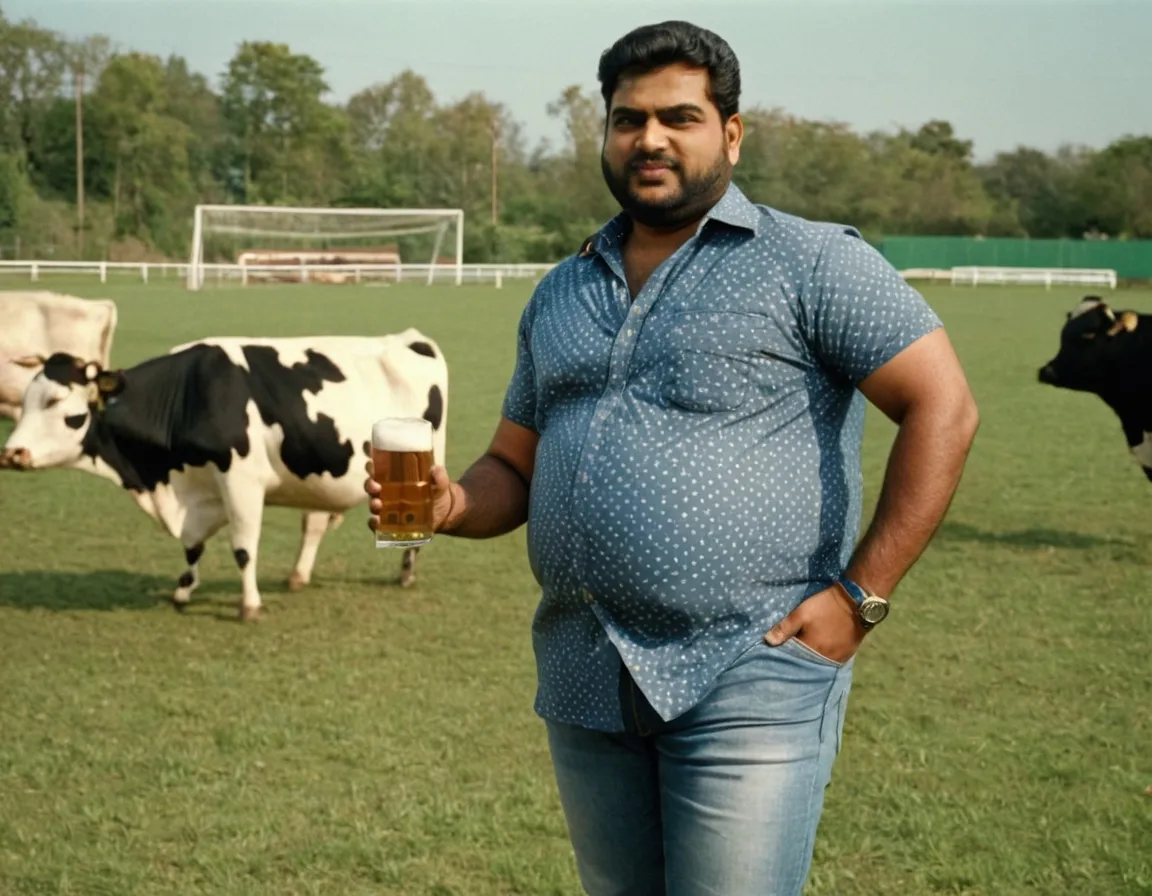
Chinmin Mastaan, a 35-year-old man from a small village in Rajasthan, had always been passionate about sustainable farming. After years of struggling with traditional farming methods, he stumbled upon the idea of using cow dung as organic manure. Fascinated by its potential, he began experimenting and soon realized the immense benefits it offered to soil health and crop yield.
Chinmin started small, collecting cow dung from his village and selling it to local farmers. The results were remarkable, and word spread quickly. Encouraged by the positive feedback, Chinmin decided to take a bold step—he would export cow dung as organic manure to foreign countries where the demand for organic products was on the rise.
With the help of a friend who had connections abroad, Chinmin managed to secure his first international deal. He meticulously packaged the manure, ensuring it met international standards, and shipped it off. The response was overwhelmingly positive, and soon, orders began pouring in from various countries.
Chinmin’s business grew exponentially. He established a company, “GoldenShit,” and employed villagers, providing them with much-needed jobs. His success story caught the attention of local media, and before he knew it, he was being featured on national television and in newspapers as the “Manure Mogul.”
One evening, as Chinmin was watching his interview on a popular news channel, he received a call from an unexpected source—the Bharatiya Janata Party (BJP). They were impressed by his innovative approach and saw in him a perfect symbol for their campaign promoting traditional Indian values and sustainable practices.
Chinmin was invited to meet with the party leaders. They praised his efforts and offered to support his business further. In return, they wanted him to be one of their mascots, a living testament to the power of traditional Indian wisdom and modern entrepreneurship.
Though initially hesitant, Chinmin saw this as an opportunity to expand his mission. He agreed, and soon, his face was everywhere—on billboards, in political rallies, and in advertisements promoting organic farming.
Chinmin’s rise to fame was meteoric. He used his newfound influence to advocate for sustainable farming practices and rural development. His company, GoldenShit, became a household name, and he was celebrated not just as a successful businessman, but as a hero who bridged tradition and innovation.
As he looked out at the vast fields of his village, now thriving with healthy crops, Chinmin felt a deep sense of fulfillment. He had come a long way from his humble beginnings, and his journey had only just begun.
Chinmin Mastaan’s success continued to soar. He was at the peak of his fame, his business thriving and his face synonymous with the BJP’s vision of traditional Indian values and sustainable agriculture. However, fame can be a double-edged sword, and Chinmin was about to experience its darker side.
One night, rumors began to circulate on social media about an incident involving Chinmin. At first, it was dismissed as malicious gossip, but as more details emerged, the whispers grew louder. A viral video surfaced, allegedly showing Chinmin in a compromising and inappropriate situation with a cow. The footage was grainy and unclear, but the damage was immediate and severe.
The media, which had once championed him as a hero, now turned against him with a vengeance. News channels ran nonstop coverage of the scandal, and newspapers splashed lurid headlines across their front pages. Social media was ablaze with outrage, and memes mocking him spread like wildfire. The BJP, which had heavily invested in his image, quickly distanced itself from him, issuing statements condemning his actions.
Chinmin’s life fell apart almost overnight. Protests erupted outside his home and office, and his business partners began to sever ties. GoldenShit’s orders plummeted, and employees started quitting in droves. Chinmin tried to defend himself, claiming the video was a fabrication, but his pleas fell on deaf ears. The court of public opinion had already judged him.
His village, once proud of their local hero, now viewed him with contempt and disgust. People who had once celebrated his achievements now shunned him. The villagers, deeply religious and reverent towards cows, saw his alleged actions as an unforgivable betrayal. Chinmin became a pariah, an outcast in his own community.
Desperate and broken, Chinmin decided to flee. He knew he could no longer stay in the village that had once been his home. Under the cover of darkness, he packed a few belongings and went to the barn where his favorite cow, Gauri, was kept. Gauri had always been gentle and trusting, and in his state of despair, Chinmin felt she was his only remaining friend.
He climbed onto Gauri’s back and, with a heavy heart, began his journey away from the village. As dawn broke, Chinmin rode silently through the fields that had once symbolized his success and dreams. The village receded into the distance, its once-welcoming embrace now a distant memory.
Chinmin did not know where he was going, only that he needed to escape the weight of his disgrace. As he rode on, the scandal and controversy left behind, Chinmin realized that fame and fortune had been fleeting illusions. His life, once filled with promise and hope, had unravelled, leaving him to face an uncertain and lonely future.
And so, on the back of a cow, Chinmin Mastaan disappeared into the horizon, a fallen hero seeking solace in the anonymity of the unknown.